10 Best They Read My Pulse Neighborhoods
What if I told you that every time you lift a finger, your pulse whispers a secret? Not the dramatic, blood-curdling kind—though that would make for a thrilling thriller—but the quiet, rhythmic cadence of life itself. Your pulse is a metronome, ticking away the seconds of your existence, and yet, how often do we truly listen? The modern world has given us tools to decode this ancient language, from the humble pulse oximeter to the intricate art of Traditional Chinese Medicine’s pulse reading. But what happens when these tools don’t just measure—when they *interpret*? When they don’t just show a number, but tell a story? That’s where things get fascinating.
The Pulse: A Silent Storyteller in a Noisy World
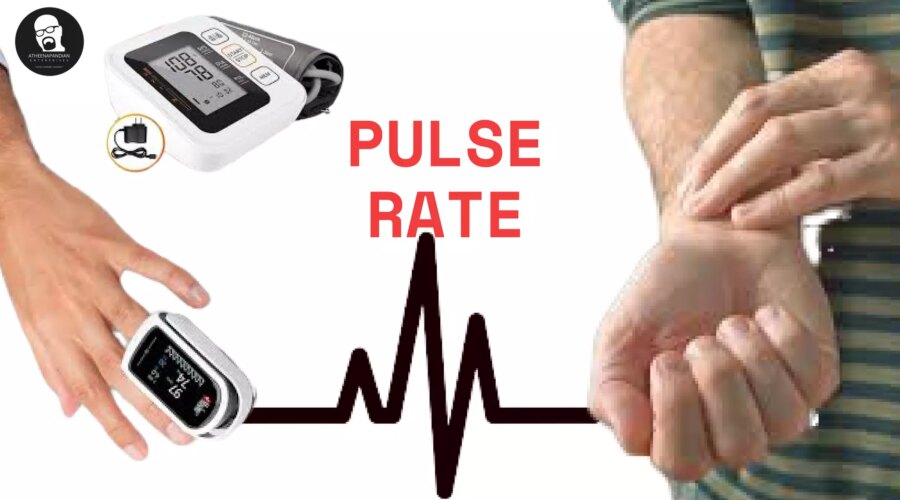
Your pulse is more than a biological ticker. It’s a living archive of your body’s whispers—stress, excitement, exhaustion, even deception. Ancient physicians swore by it. Modern science quantifies it. But what if your pulse could do more than just *exist*? What if it could *reveal*? The pulse oximeter, that little clip-on gadget you’ve probably seen in hospitals or gyms, doesn’t just measure oxygen saturation. It’s a window into how hard your heart is working, how efficiently your lungs are playing their part. And yet, we treat it like a calculator—input, output, done. But what if we leaned in? What if we asked it questions?

Imagine standing in a doctor’s office, watching the numbers flicker on a screen. Your heart rate is 72. Your oxygen is 98. But what if the machine could also say, *“You’re holding your breath right now,”* or *“You’re lying about how much you slept”*? The pulse doesn’t lie. It’s the body’s most honest narrator, and yet, we’ve reduced it to a single line of data. What if we treated it like a confessional?
The Art of Listening: When Science Meets Intuition
Traditional Chinese Medicine (TCM) has been listening to pulses for millennia—not with machines, but with fingers. A skilled practitioner doesn’t just count beats; they feel for depth, rhythm, texture. Is it floating like a feather? Sinking like a stone? Slippery like a fish? Each quality tells a story. Fast? Heat. Slow? Cold. Wiry? Stress. Weak? Deficiency. It’s not just medicine; it’s poetry in motion. And yet, in a world obsessed with algorithms and AI, we’ve sidelined this tactile wisdom. Why trust a machine when a human hand can *feel* the difference between a pulse that’s racing from fear and one that’s racing from exertion?

But here’s the rub: intuition is subjective. What one healer calls “slippery,” another might dismiss as “normal.” The pulse, in its raw form, is a Rorschach test—open to interpretation. And that’s where the challenge lies. In a world that demands precision, how do we reconcile the art of pulse reading with the science of measurement? Can a machine ever truly *understand* the pulse, or will it always be a blunt instrument compared to a human touch?
The Modern Dilemma: Trusting the Numbers Over the Feel
We live in an era where data is king. Fitness trackers chirp at us, smartwatches buzz with alerts, and our phones nudge us to “breathe” when our heart rate spikes. But what if the data is wrong? What if your watch thinks you’re stressed when you’re just excited? What if the pulse oximeter misreads your oxygen levels because you have cold fingers? The pulse doesn’t care about your device’s calibration. It doesn’t know about software updates. It just *is*. And yet, we’ve outsourced our trust to silicon and code.
Consider this: a study found that fitness trackers can be off by as much as 20 beats per minute during exercise. Twenty. That’s the difference between “I’m working hard” and “I’m about to have a heart attack.” The pulse oximeter might fail if your skin is too dark, or if you’re wearing nail polish. The TCM practitioner might misread your pulse if they’re tired, or distracted. No system is perfect. But which one do you trust when your health is on the line?
The Pulse as a Mirror: What It Reveals About You
Your pulse doesn’t just reflect your physical state—it’s a mirror of your life. Sleep poorly? Your pulse will tell. Eat too much sugar? Your pulse will tell. Fall in love? Your pulse will tell. It’s the body’s way of keeping score, and it never lies. But here’s the twist: what if *you* could lie to your pulse? What if you could train it to behave? Athletes do this all the time—biohacking their heart rates to peak performance. Meditators slow their pulses to a crawl, defying what we think is possible. The pulse is malleable. It’s not just a slave to biology; it’s a collaborator in your well-being.
But what if you didn’t want to listen? What if you preferred the noise of modern life—the caffeine-fueled sprints, the all-nighters, the stress-fueled decisions? Your pulse would still be there, ticking away, recording every misstep. It’s the ultimate accountability partner, the silent witness to your choices. And that’s the challenge: do you dare to look it in the eye?
The Future: When Pulses Talk Back
We’re hurtling toward a future where our bodies are constantly monitored, where our pulses don’t just whisper but *speak*. Imagine a world where your pulse oximeter doesn’t just display numbers but says, *“Your stress levels are elevated. Would you like to meditate?”* Where your smartwatch doesn’t just buzz but *advises*, *“Your heart rate variability suggests you’re dehydrated.”* Where AI doesn’t just analyze but *interprets*, turning your pulse into a narrative rather than a spreadsheet.
But with that power comes a question: who controls the narrative? If your pulse is telling a story, who gets to edit it? The tech companies? The doctors? You? The line between health and surveillance is blurring. Do you want your pulse to be a personal diary or a public record? Do you want it to be a tool for healing or a weapon for manipulation?
The pulse has always been a storyteller. The question is: will we listen, or will we let the machines do the talking?