
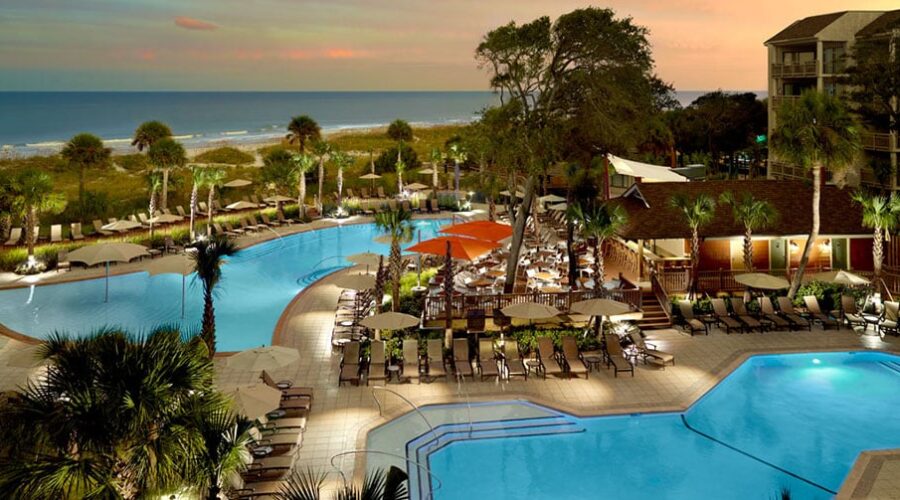
10 Best Luxury Medical Wellness Resorts in the US: Preventive Health and Pampering Neighborhoods
In a world where the relentless pace of modern life leaves little room for self-preservation, a new breed of sanctuary has emerged—one that doesn’t just promise relaxation, but a radical redefinition of well-being. Luxury medical wellness resorts in the United States are no longer the exclusive domain of the über-wealthy; they are becoming the blueprint for a future where health is not an afterthought, but a deliberate, indulgent pursuit. These enclaves of opulence are where cutting-edge preventive medicine meets the art of pampering, where every treatment is a calculated step toward longevity, and where the line between therapy and decadence blurs into something transcendent. This is not mere vacationing. This is a manifesto for living—one that dares to ask: what if your next retreat could rewrite your health legacy?
The Evolution of Wellness: From Spa Day to Medical Mastery
Wellness, once synonymous with cucumber water and aromatherapy, has undergone a metamorphosis. The modern luxury medical wellness resort is a cathedral of biohacking, where ancient healing traditions collide with genomic sequencing and AI-driven diagnostics. Gone are the days when a massage and a green juice constituted a “detox.” Today, these resorts offer hyper-personalized health audits—blood chemistry panels that read like a novel, microbiome mappings that reveal the hidden ecosystems within you, and epigenetic testing that decodes how your lifestyle choices are literally rewriting your DNA. The promise? Not just to feel better, but to be better—long before symptoms ever surface.
Imagine waking to the sound of your own biometrics pinging from a wearable that tracks not just your steps, but the subtle shifts in your cortisol rhythm. Picture a consultation with a physician who doesn’t just listen to your heart, but analyzes the microcalcifications in your coronary arteries via a CT scan, then prescribes a bespoke regimen of peptides, hyperbaric oxygen therapy, and targeted nutritional interventions. This is the new frontier: where medicine stops reacting and starts predicting, where luxury isn’t a frivolous add-on but the scaffolding for precision.
The Anatomy of a Medical Wellness Retreat: What Awaits You
Step into one of these sanctuaries, and you’re not entering a spa—you’re stepping into a clinical ecosystem designed to recalibrate your physiology. The architecture alone is a statement: floor-to-ceiling windows that flood the space with circadian-aligned light, air filtration systems that scrub pollutants down to the molecular level, and soundscapes engineered to synchronize your brainwaves into delta frequencies. Every detail is a calculated nudge toward homeostasis.
The treatments are where the alchemy happens. A thermographic breast scan might reveal early-stage inflammation before a mammogram ever could. A lymphatic drainage session using medical-grade pneumatic compression could be the difference between chronic fatigue and sustained vitality. And then there are the IV nutrient drips—custom cocktails of glutathione, NAD+, and high-dose vitamin C, administered in a setting that feels less like a clinic and more like a five-star lounge. Even the food is medicine: meals crafted by chefs and functional nutritionists, where every ingredient is selected for its anti-inflammatory properties, its ability to modulate gut microbiota, or its capacity to enhance mitochondrial function.
But the true innovation lies in the integration. These resorts don’t silo disciplines—they orchestrate them. A session with a neurofeedback specialist might be followed by a float tank therapy, all under the watchful eye of a longevity physician who adjusts your protocol in real time based on biomarkers. It’s healthcare as a symphony, where each instrument plays its part in perfect harmony.
The Science Behind the Serenity: How These Resorts Are Redefining Longevity
At the heart of this movement is a growing body of research that proves what these resorts have intuitively known for years: that the body’s capacity to heal is not just biological, but deeply influenced by environment, psychology, and even aesthetics. Studies on epigenetic expression show that stress reduction alone can silence genes linked to inflammation and accelerate the shortening of telomeres—the cellular markers of aging. Meanwhile, research on hyperbaric oxygen therapy reveals that it can stimulate the growth of new brain cells, effectively reversing cognitive decline in some cases.
Then there’s the role of psychedelic-assisted therapy, now being offered in select medical wellness resorts under strict clinical protocols. Microdosing psilocybin or ketamine in a controlled, therapeutic setting has been shown to “reset” neural pathways, alleviating depression and PTSD while enhancing neuroplasticity. Pair this with advanced neuroimaging, and you have a model where mental health is not just managed but optimized. The message is clear: these resorts are not just places to escape—they are laboratories where the future of human health is being written.
The Ethical Luxury Paradox: Can Wellness Be Both Elite and Equitable?
Yet for all their transformative potential, these resorts exist in a moral gray zone. They are bastions of exclusivity, where a single week can cost the equivalent of a down payment on a home. The irony is palpable: the same technologies that could democratize preventive healthcare—telemedicine, wearable diagnostics, personalized nutrition apps—are often gatekept behind velvet ropes and marble reception desks. Is this the natural evolution of wellness, or a capitalist distortion of it?
Some argue that these resorts serve as proving grounds for innovations that will eventually trickle down to mainstream healthcare. The first FDA-approved psychedelic therapies, for instance, were pioneered in high-end clinical settings. Others contend that the entire model is a form of medical gentrification, where the wealthy buy longevity while the rest are left to navigate a broken healthcare system. The truth, as ever, lies somewhere in the tension between aspiration and access. What is undeniable is that these resorts are forcing a conversation: if health is the ultimate luxury, who gets to define it?
Your Personalized Blueprint: How to Choose the Right Retreat
Not all medical wellness resorts are created equal. Some lean into the clinical—think Mayo Clinic’s executive health programs meets five-star hospitality. Others are more esoteric, blending indigenous healing traditions with biohacking. The key is alignment: what do you seek to transform? Are you chasing metabolic optimization? Cognitive enhancement? Emotional resilience? The right retreat will feel less like a vacation and more like a pilgrimage—one tailored to your unique biographical and biological narrative.
Start by interrogating the credentials of the medical team. Are they board-certified in functional medicine? Do they employ data-driven diagnostics, or is the approach more intuitive? Scrutinize the treatment modalities: Are they evidence-based, or are they the latest wellness fad repackaged as science? And perhaps most importantly, ask yourself: does this place feel like a sanctuary, or a laboratory? The most effective retreats are those that honor the sacredness of the human body while wielding the precision of a scalpel.
The Future of Wellness: Where Do We Go From Here?
The trajectory is clear: medical wellness resorts are evolving from boutique experiences into global health hubs. We’re already seeing the rise of wellness real estate—entire communities designed around longevity, where homes are built with circadian lighting, air purification systems, and private biofeedback suites. The next frontier? Space-based wellness, where microgravity environments are leveraged for cellular rejuvenation, or AI-driven longevity coaches that monitor your biomarkers in real time and adjust your lifestyle in nanoseconds.
But perhaps the most radical shift will be cultural. As these resorts proliferate, they’re normalizing the idea that health is not a passive state to be maintained, but an active, ongoing project of self-optimization. The message is no longer “treat your symptoms” but “engineer your vitality.” The question is no longer “how do I feel better?” but “how do I become the best version of myself?” In a world that glorifies burnout, these retreats offer a seductive alternative: a life lived not just longer, but brighter.
So, dare you take the leap? Not just to a resort, but to a new paradigm—one where luxury and longevity are not opposing forces, but the twin pillars of a life well-lived. The future of wellness isn’t coming. It’s here. And it’s waiting for you.